
another sound recording i like at the mo’
difficult beginnings
my artist newsletter blog for ATS
to learn…
to learn creatively is to actively draw lessons from the culture that’s around us. it is to be critically aware of the stories that are being told in the arts and in the media. it is also to be self-directed in what we learn – not to be told what we think or do, but to learn for ourselves by questioning assumptions and creating new things
a little history…
i am a designer maker, with a fledgling ceramic jewellery business, who is 3 months into an MA in Arts Practice and Education. Whilst i thoroughly enjoy my business, I’m not great at self promotion and so there’s never been a blog before which included this, although there have been a couple just as an artist. it seems fortuitous to amalgamate everything at this time, rather than separating them as entities, as i suspect things are about to get a little messy, and who knows what might happen next
so this is the business www.amosdentondesigns.co.uk have a look if you like, but that is not all of me, so a few more posts are needed….
inspiration
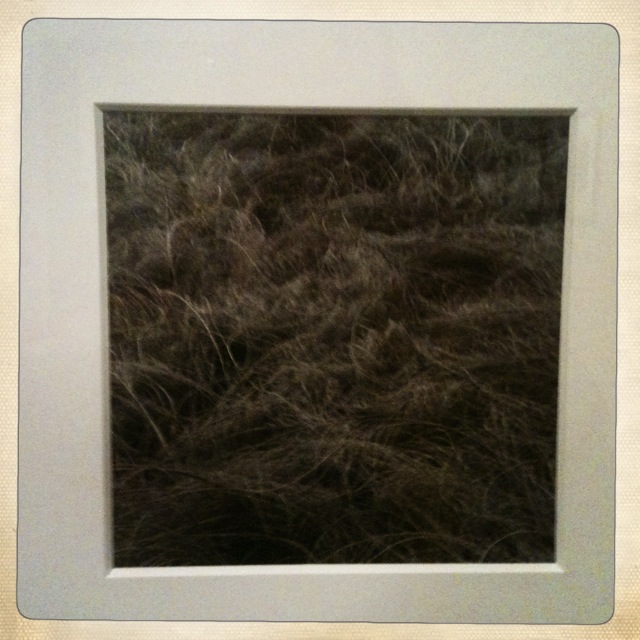
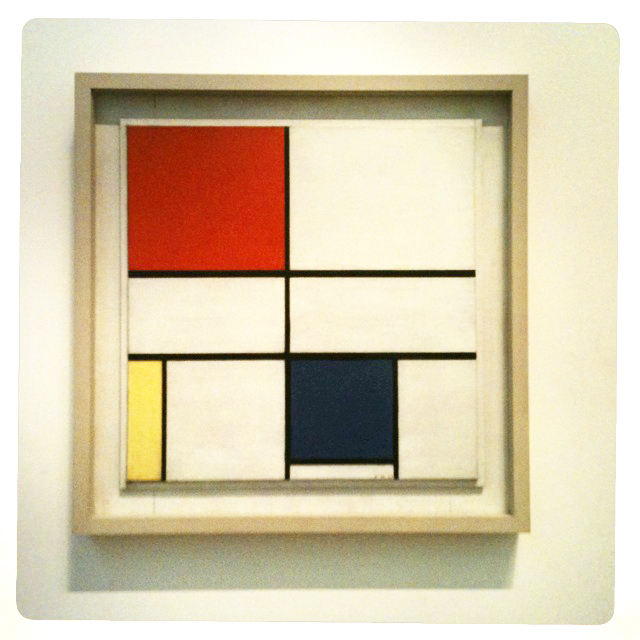
took our students to tate modern to see the Klee exhibition, ended up whizzing through it as got carried away with finding cubes in all the other artwork their, slightly annoyed at self, may revisit as would hate to miss out. 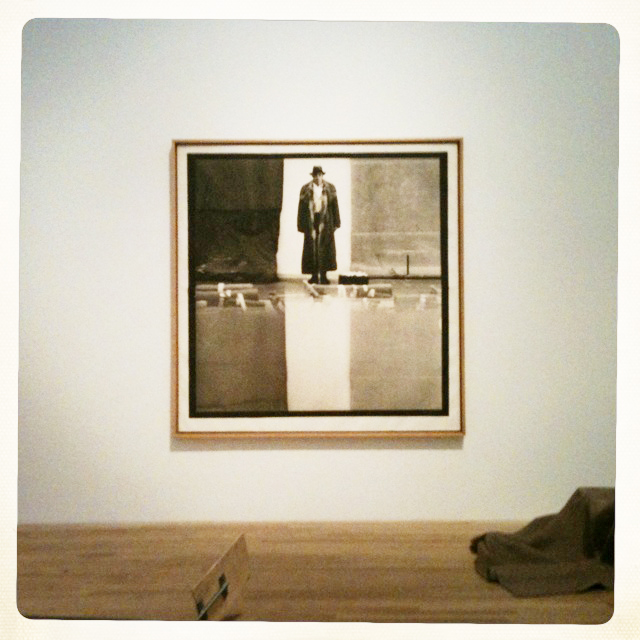



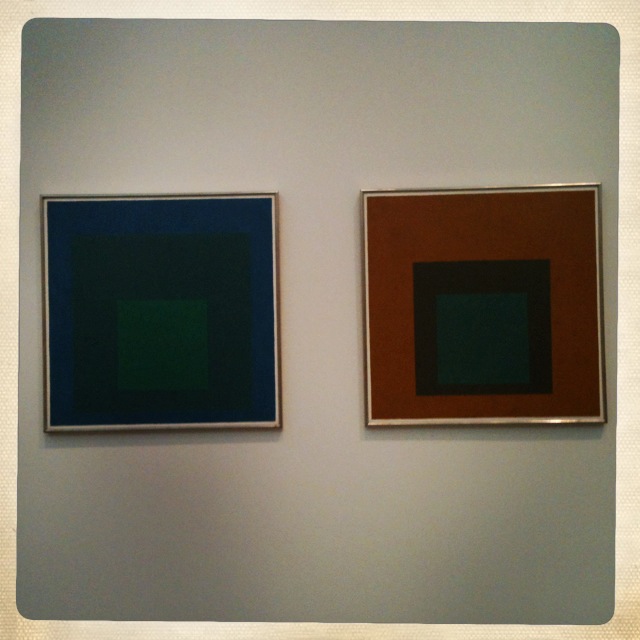
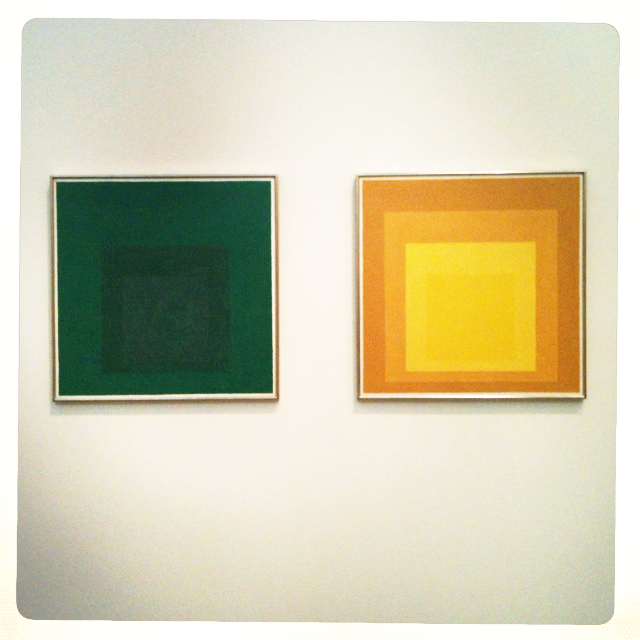

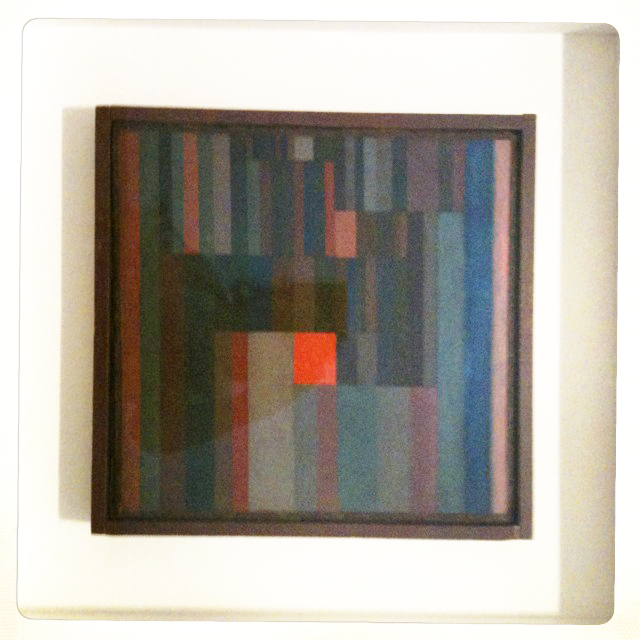
bauhaus
i have decided to try out some of the techniques the students at the bauhaus were taught, and whether they would improve my drawing skills. This began as a mini obsession with square, circle, triangle which also harks back to Froebel’s gifts.
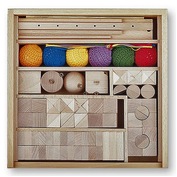
For my essay for MA i would like to look at both Froebel and the Bauhaus, but it’s thinking of a justifiable link. So after drawing a page of repeat pattern of square, circle, triangle i then moved onto straight lines across a page which get lighter and darker. Bauhaus students did this on a massive scale with their paper pinned to the wall, but i didn’t finish one page as it hurt my wrist! next was drawing a perfect circle free hand; not too bad, but nowhere near Bauhaus standards.
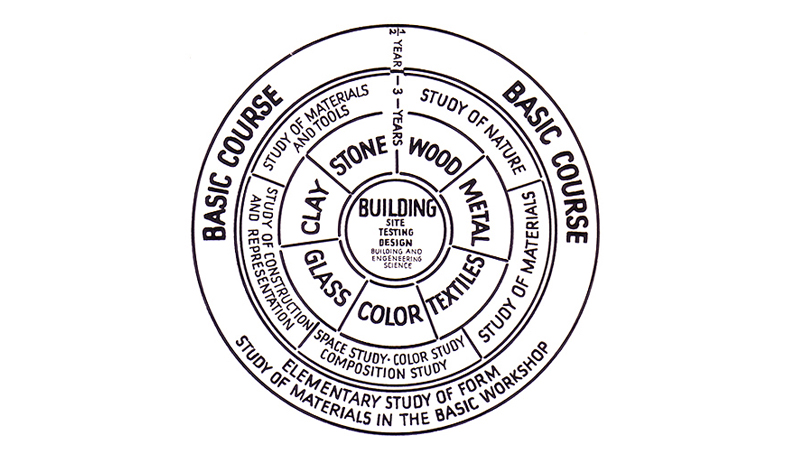
Finally decided on
“Does the framework of Froebel’s system, which stemmed from his vision of unity, have any direct effect on the ideas of unity for Gropius, thereby predetermining his framework?”
better get back to reading…
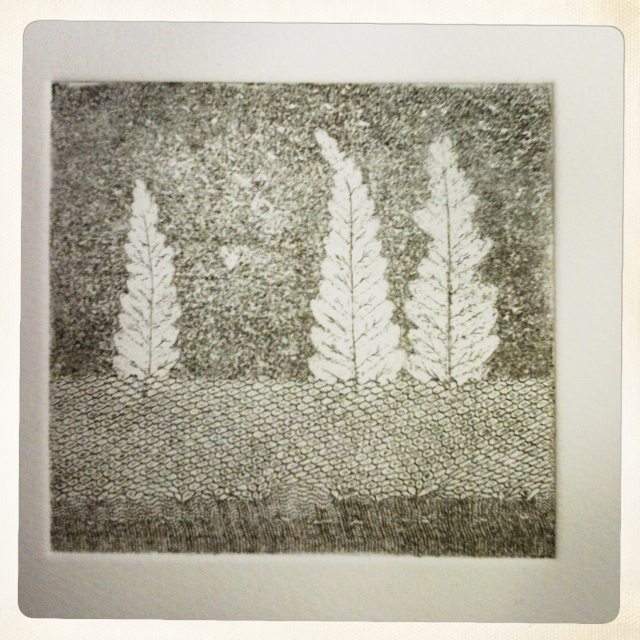
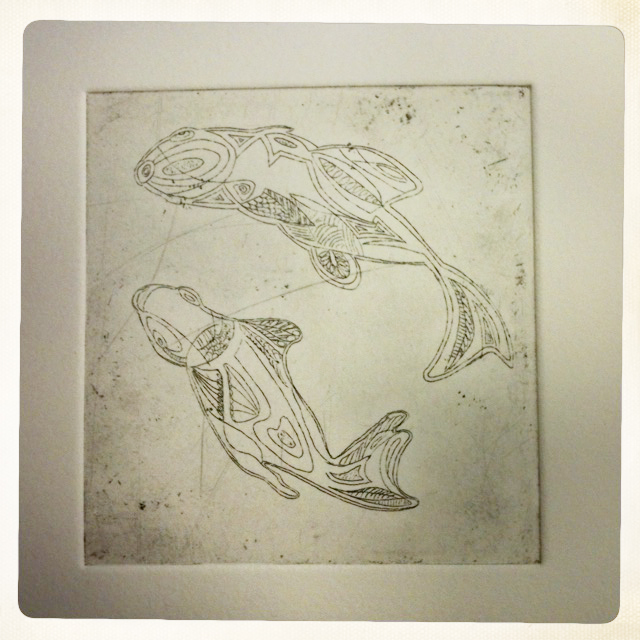
etching workshop


old blog thoughts
I’ve been thinking about the idea of space and the artist studio more, and have found numerous essays surrounding this as a subject matter, from the 1960’s onwards. whilst it is in the back of my mind that i am still interested in how being in an artistic space makes you feel internally, i’ve become slightly sidetracked by how artists see their space. even reading tonight on the way home i was surprised to find that in the 1960’s there was such strong belief that the studio had had it’s day and that we were now in a post-studio world. this has become even more appropriate as an opinion given that so many artists simply have a laptop as their permanent studio without any tied physical entity to work in, yet initially it was risen as a given over 50 years ago (daniel buren). this all then warps what my opinion of a studio space is. initially concerned with the assumption all artists strived to have separate space to create work, as i so clearly need, actually it appears that significant numbers are more interested in the relationship with where the work will be placed once finished. equally i had assumed that the studio is a room. therefore i am simply projecting my own needs onto a majority, which couldn’t be further from the truth. so really what i need to quantify first is that the studio is a flexible form, if i do wish to concentrate on how a “space” makes you feel. i’ve had a chance to work on some initlal drawings of ideas and these seem to centre around a neat organised space or a packed full haphazard enclosure of “things”. due to my current interest in the bauhaus, the drawings are based around a perfect cube in homage to the basic design/foundation course drawing processes (vorkurs). but now it becomes clear that i need to establish why i am attempting to enclose that form so specifically, when actually it appears most artists do not need define their space with solid structure. do i carry on with my assumptions of what an artist needs and go from there or forget my own requirements and listen to the majority? how does that then relate back to my interest in how you interact with a space, which i feel is still relevant?
thus there are numerous factors that still need considering – does a space have to be solid? what am i trying to capture by focussing on a feeling? do i need to define what a studio is before i move on with any more practical ideas – or should all versions be established and see how that affects the “feel” of the place?
hmm, i feel a lot more reading is needed if for no other reason than to make sure my assumptions on what artists define and use a space for do not detract from the really interesting ideas that may be coming to the fore.
if anyone reading this could comment on what entity their studio exists in i’d appreciate it. or what you perceive to be a “studio” in your opinion.
finally, there is one more aspect i wish to keep included in the thinking process, the relation of how best to use a space; and the architectual based process of negative space and how we need to allow this to exist to best utilise the space (in a 3Dimensional capacity).
back to the drawing board i feel, literally!
space part 2
I’ve been thinking about the idea of space and the artist studio more, and have found numerous essays surrounding this as a subject matter, from the 1960’s onwards. whilst it is in the back of my mind that i am still interested in how being in an artistic space makes you feel internally, i’ve become slightly sidetracked by how artists see their space. even reading tonight on the way home i was surprised to find that in the 1960’s there was such strong belief that the studio had had it’s day and that we were now in a post-studio world. this has become even more appropriate as an opinion given that so many artists simply have a laptop as their permanent studio without any tied physical entity to work in, yet initially it was risen as a given over 50 years ago (daniel buren). this all then warps what my opinion of a studio space is. initially concerned with the assumption all artists strived to have separate space to create work, as i so clearly need, actually it appears that significant numbers are more interested in the relationship with where the work will be placed once finished. equally i had assumed that the studio is a room. therefore i am simply projecting my own needs onto a majority, which couldn’t be further from the truth. so really what i need to quantify first is that the studio is a flexible form, if i do wish to concentrate on how a “space” makes you feel. i’ve had a chance to work on some initlal drawings of ideas and these seem to centre around a neat organised space or a packed full haphazard enclosure of “things”. due to my current interest in the bauhaus, the drawings are based around a perfect cube in homage to the basic design/foundation course drawing processes (vorkurs). but now it becomes clear that i need to establish why i am attempting to enclose that form so specifically, when actually it appears most artists do not need define their space with solid structure. do i carry on with my assumptions of what an artist needs and go from there or forget my own requirements and listen to the majority? how does that then relate back to my interest in how you interact with a space, which i feel is still relevant?
thus there are numerous factors that still need considering – does a space have to be solid? what am i trying to capture by focussing on a feeling? do i need to define what a studio is before i move on with any more practical ideas – or should all versions be established and see how that affects the “feel” of the place?
hmm, i feel a lot more reading is needed if for no other reason than to make sure my assumptions on what artists define and use a space for do not detract from the really interesting ideas that may be coming to the fore.
if anyone reading this could comment on what entity their studio exists in i’d appreciate it. or what you perceive to be a “studio” in your opinion.
finally, there is one more aspect i wish to keep included in the thinking process, the relation of how best to use a space; and the architectual based process of negative space and how we need to allow this to exist to best utilise the space (in a 3Dimensional capacity).
back to the drawing board i feel, literally!
my first proposal
Discuss your current arts-based practice and/ or professional experience.
Having completed an exhibition for the ATS scheme in August, my current work is very much in the early stages. My current practice includes running a ceramic jewellery business in a 6×8 shed we inherited when we moved into our house almost 5 years ago. For the first time in my life I had a physical space where I could escape to and create whatever I felt like. The business has been established for over 3 years now and is ticking along nicely. Initially, it was a bit of everything – ceramics, crochet, textiles, paintings – but as time has gone on the ceramics has won out and over the last 12 months I have refined from 30 different ranges down to just 8, all based on a combination of ceramics and photography. Whilst exhibiting at a trade fair in April 2012 I had a conversation with the RBSA, about my work being sold in their shop, but ending up in discussing teaching projects that they had planned in the next year. This ended up being two school projects, one primary and one secondary, all based around The Arts Award, which is very similar to Duke of Edinburgh award, but just for arts. Whilst working on these projexts it became more apparent that I had finally outgrown my little shed and I began to find the space very restrictive both physically and creatively. As a result I saved every penny from the projects and this summer I have installed a 14×10 cabin. Whilst this may all seem like just an excuse to be self indulgent in my new shed, it struck me how stuck I was in the old space, but just by giving myself that little bit more, the old creative juices have started flowing again. Inside there is not necessarily a lot more physical space as I added more storage and a much larger kiln, which has to have a certain area of clearance, but yet it felt like a cloud had been lifted. This then made me think, do artists need a particular amount of space to work in without feeling too restricted? At the same time this summer my dad bought a railway carriage to have as a holiday home. Frequently used after the second world war to solve the housing shortage in south east England, the carriage is a two bedroomed affair, with separate sitting room, dining room, kitchen and bathroom. This made me think again about the amount of space we choose to inhabit. Would it not be a fairer world if we all only had 1 railway carriage to use? How would we all use it differently? How many variations could there be to maximise the space? I had grand daydreams of installing a whole railway carriage in the top studio space at Margaret Street but that would possibly involve taking the roof off so may not be a popular option!
I’m not interested in interior design, or how to make a home look pretty, or “how spaces should be comfortable to the soul in an airy fairy zen type fashion” but more the cubic footage of space we have the potential to use.
As part of the MAAPE we were asked to track our art education, which mine begins at primary school. As a result of looking for images of said school, I stumbled on images of the estate I grew up on until I was 8. For both buildings design awards had been won. There is little information about my school, but plenty about the span house I grew up in; something that again is a clever use of space (just 4.9mx8.1m), and is provided for the masses too. [How much of an impact has being exposed to that architecture at a young age influenced my taste? (also Camberwell college of art building)]
If you combine all the above then it comes down to cubic space, how much does an artist need to create in, how much space do we really need to live in.
Aims: what do you hope to achieve and why?
I find this quite difficult to answer, but in some way I would like to be able to quantify what amount of space different types of artists need to be creative in (fine art/designers/writers/dancers), similarly I am interested in the conflict between excessive personal space and lack of suitable housing (not politics). I am not an architect but I suspect elements to do with architectural design may begin to influence this, although equally important is the ready made nature of the cabin/shed and railway carriage (whether that just manifests itself in basing the design around wood is a possibility). I don’t think I am interested in producing perfect scale models of studios, although that would solve a lot of the physical/cost/time elements, although I am interested in looking at scale drawings by Bauhaus et al. I seriously doubt there will be any connection to my ceramic business apart from reference to the shed. I’m not interested in the recent trend for people adding garden rooms to their homes either. Or any spiritual namby pamby.
(as a side note I seem to have an accentuated skill in perceiving spatial capability – planning of exhibitions through to packing up orders in boxes)
Overall, I guess it will come down to cubic footage in relation to physical activity.
Reading Material
Bauhaus isometric design – Bauhaus Fiedler, Jeannine; Feierabend, Peter Book . English. Published Cologne : Könemann 2000
Bauhaus: a conceptual model Martin-Gropius-Bau (Berlin); Thöner, Wolfgang Book . English.
Published Ostfildern : Hatje Cantz 2009
http://www.smg.ac.uk/documents/FEandoverseas.pdf – report on how the LSC determines space for new build FE & He colleges – literal measurements of cubic space by type of student
Sanctuary: Britain’s Artists and their Studios: Britian’s Artists and their Studios Hossein Amirsadeghi
Artist’s Studios by M.J. Long
Design and Art (Documents of Contemporary Art) by Alex Coles
The studio. Published London : Whitechapel Gallery /MIT Press 2012
Architecture: Form, Space, and Order, Ching, Francis
Space Matters: Exploring Spatial Theory and Practice Today, Feireiss, Lukas
Modern Architecture: A Critical History, Frampton, Kenneth
Order in Space: A Design Source Book, Critchlow, Keith
Space craft: fleeting architecture and hideouts Feireiss, Lukas; Klanten, Robert
Human space, Bollnow, Otto Friedrich, 1903-1991
Make space: how to set the stage for creative collaboration Doorley, Scott; Witthoft, Scott
Place advantage: applied psychology for interior architecture Augustin, Sally
The social logic of space Hillier, Bill; Hanson, Julienne
Rachel Whiteread Drawings
Rachel Whiteread’s House John Bird
(Craft, space and interior design, 1855-2005 Alfoldy, Sandra, 1969-; Helland, Janice)
(Human dimension & interior space: a source book of design reference standards Panero, Julius; Zelnik, Martin)
http://artistspaces.tumblr.com
http://www.spikeisland.org.uk/about-spike-island/
http://www.dezeen.com/2011/11/07/artist-car-park-studio-by-edwards-moore/
Anthropometry
Artists etc:
Erno Goldfinger, Le Corbusier, frank Lloyd wright etc
Tony Cragg, Stack (maximum space filled in cube form – interesting as a way to squash all elements into a cube form, and also how the artist manipulated the set size to fill it with so many elements)

this was followed by images of these artists in their studios
Lucien freud, francis bacon, Pollock, Le Corbusier, Henry moore, Alexander calder, Georgia o’keefe, Claude monet, Frank Lloyd Wright
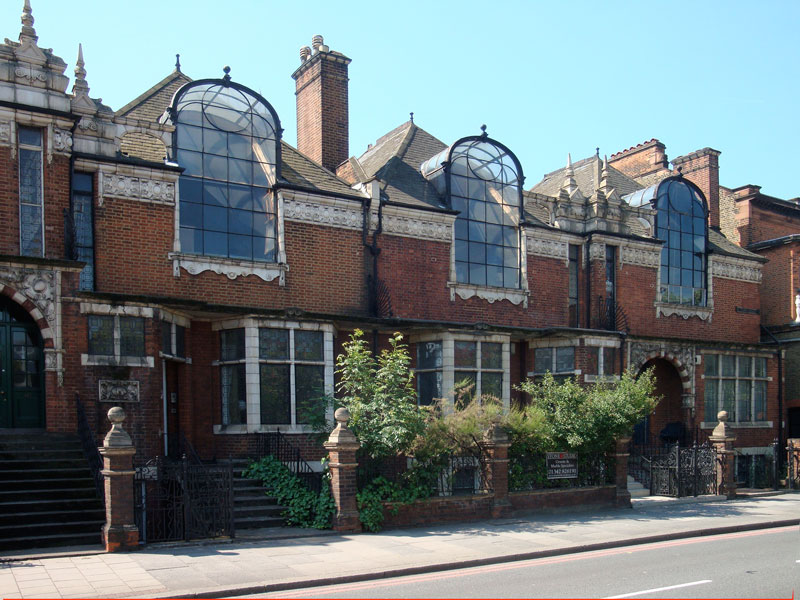
and finally some studios i used to drive past in london which were purpose built for artists
St Paul’s studios London
 amosdenton